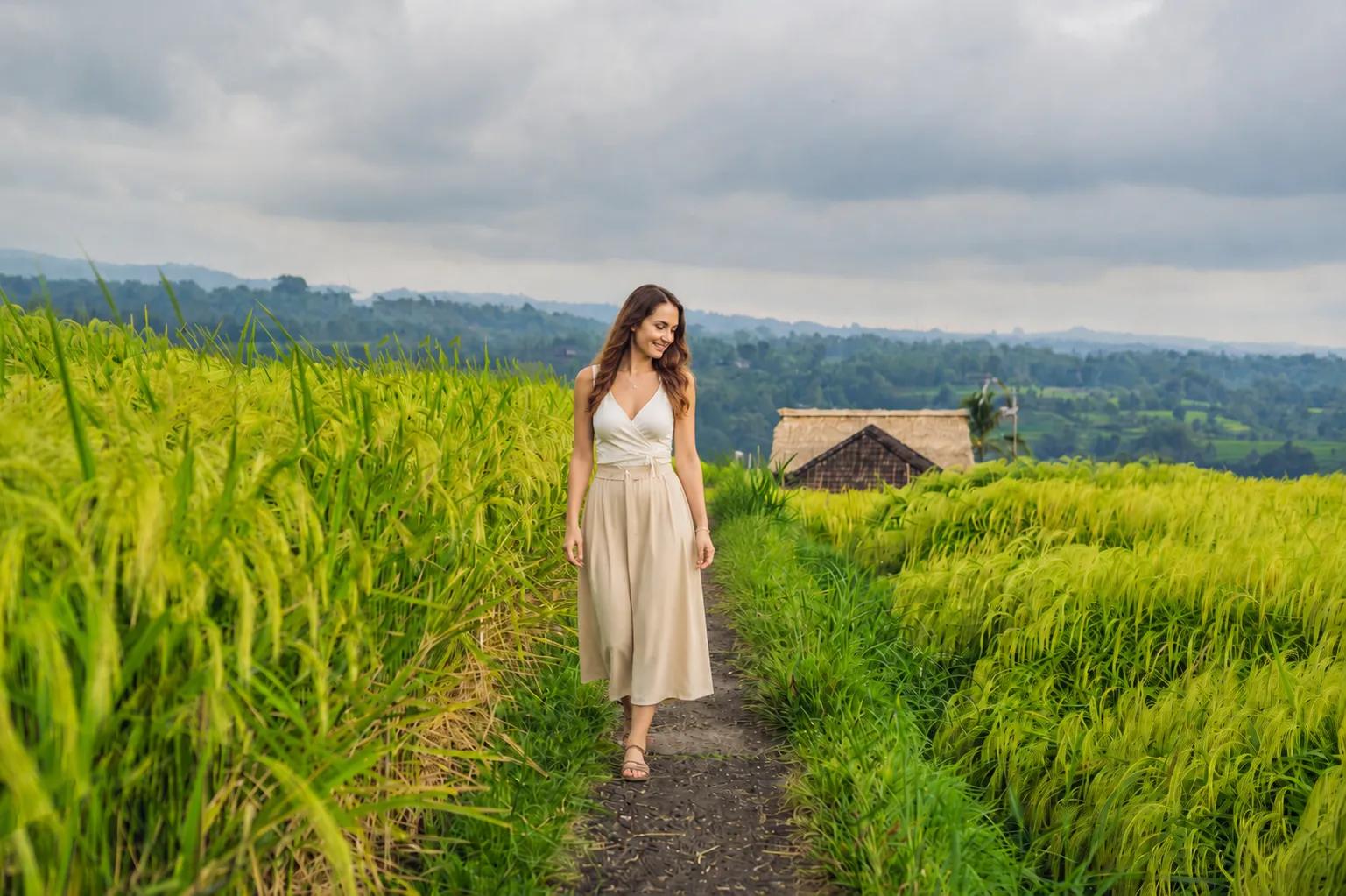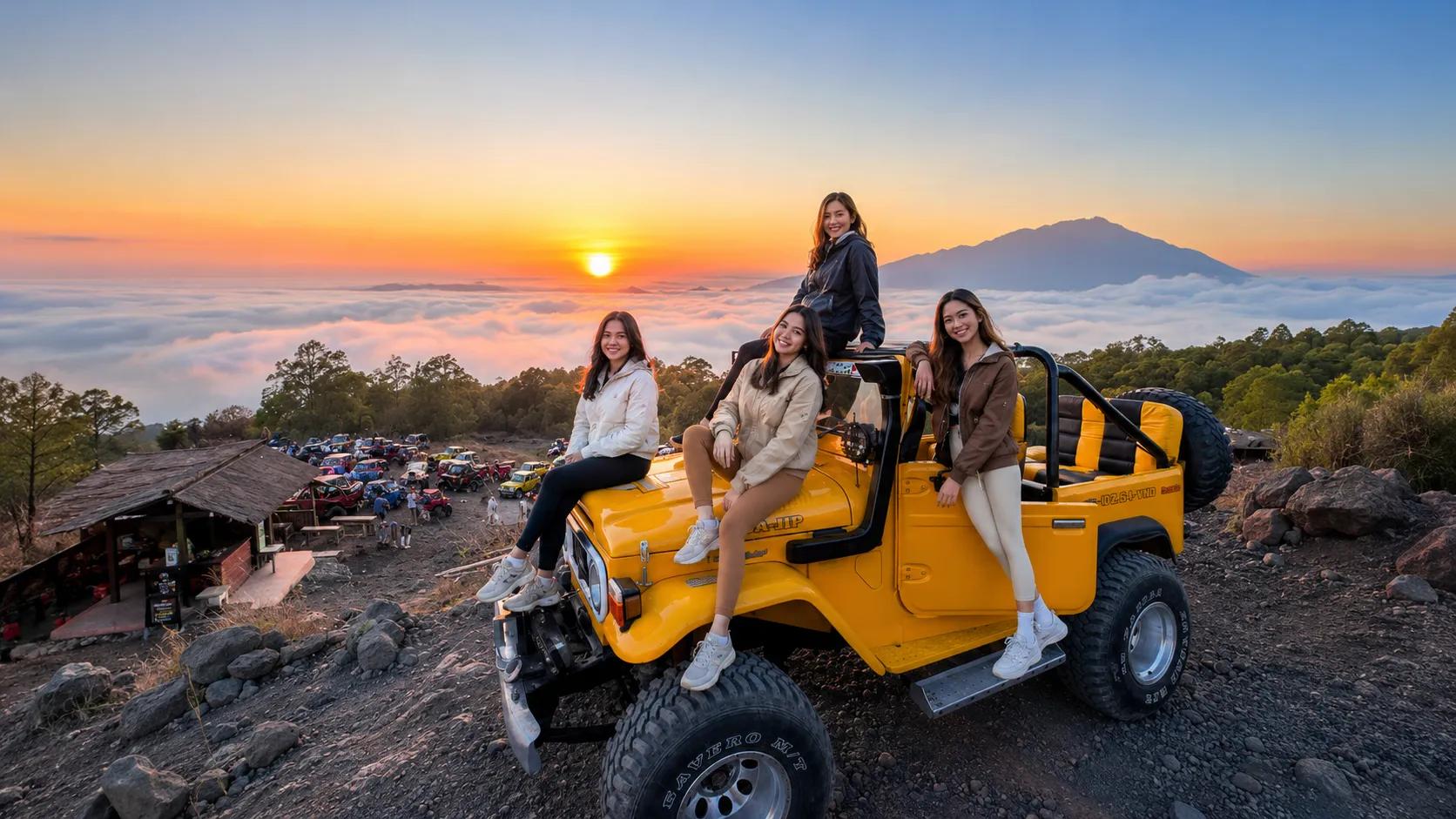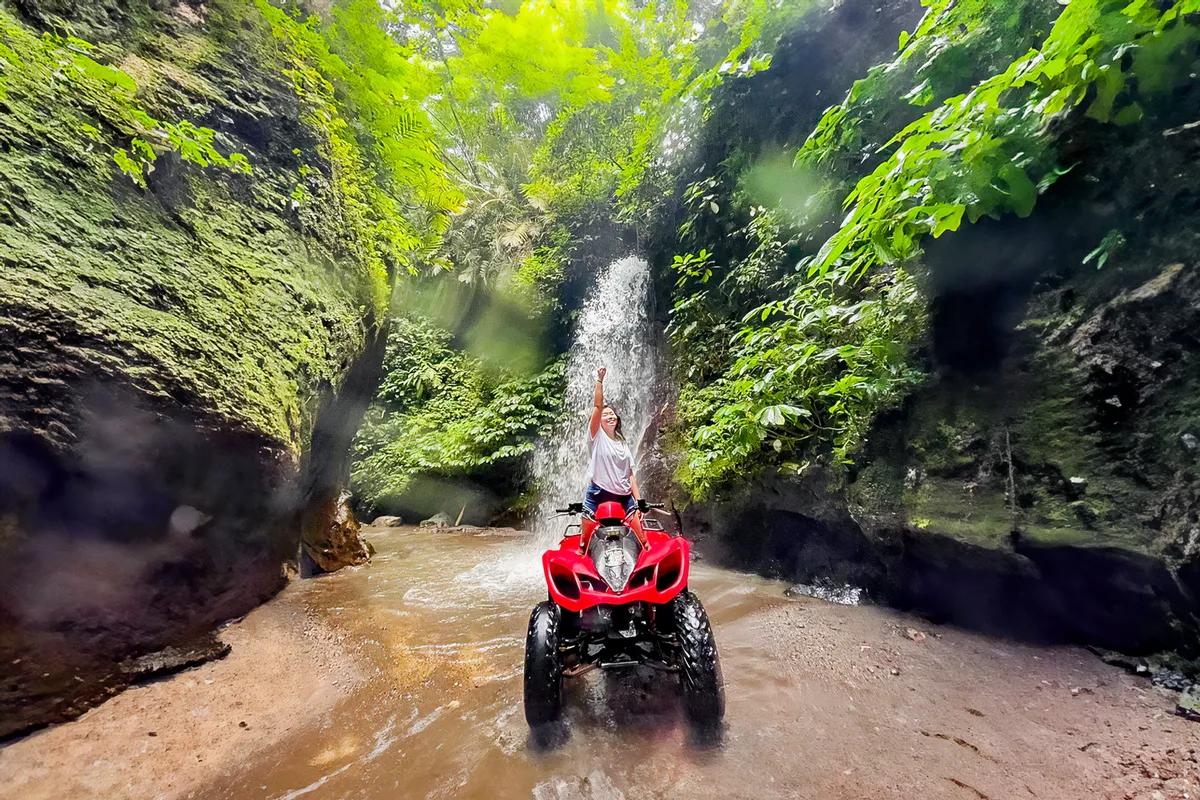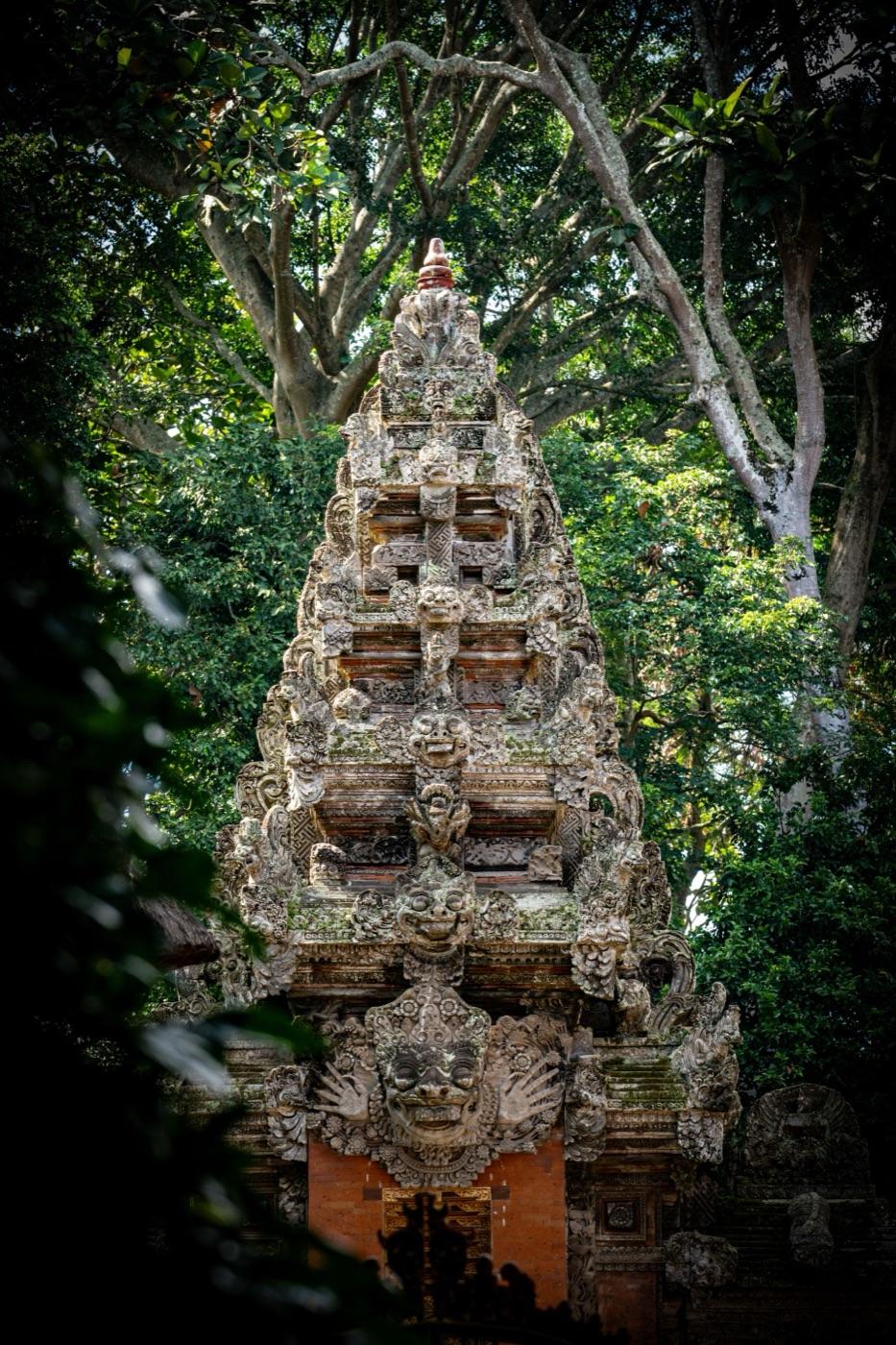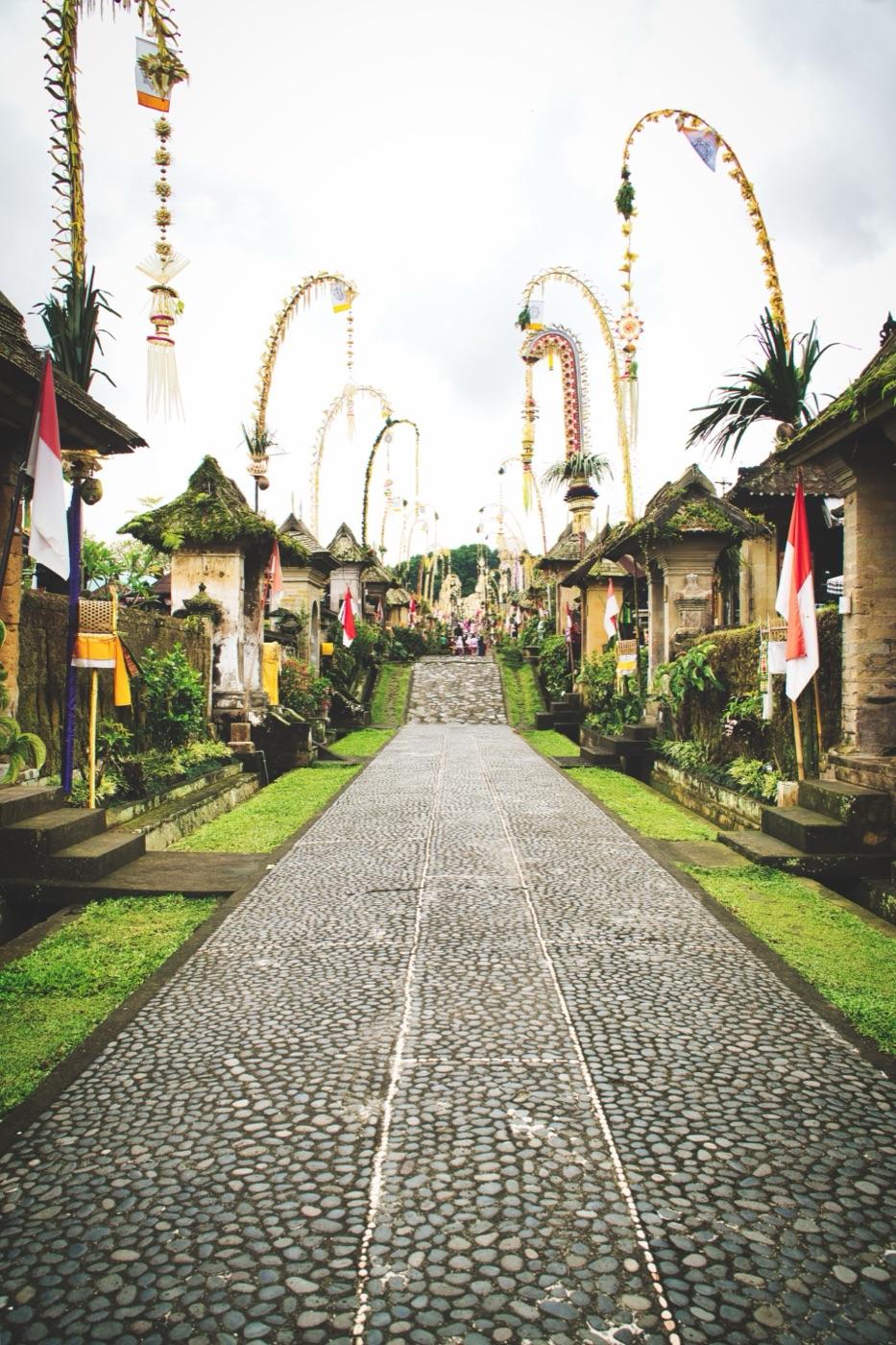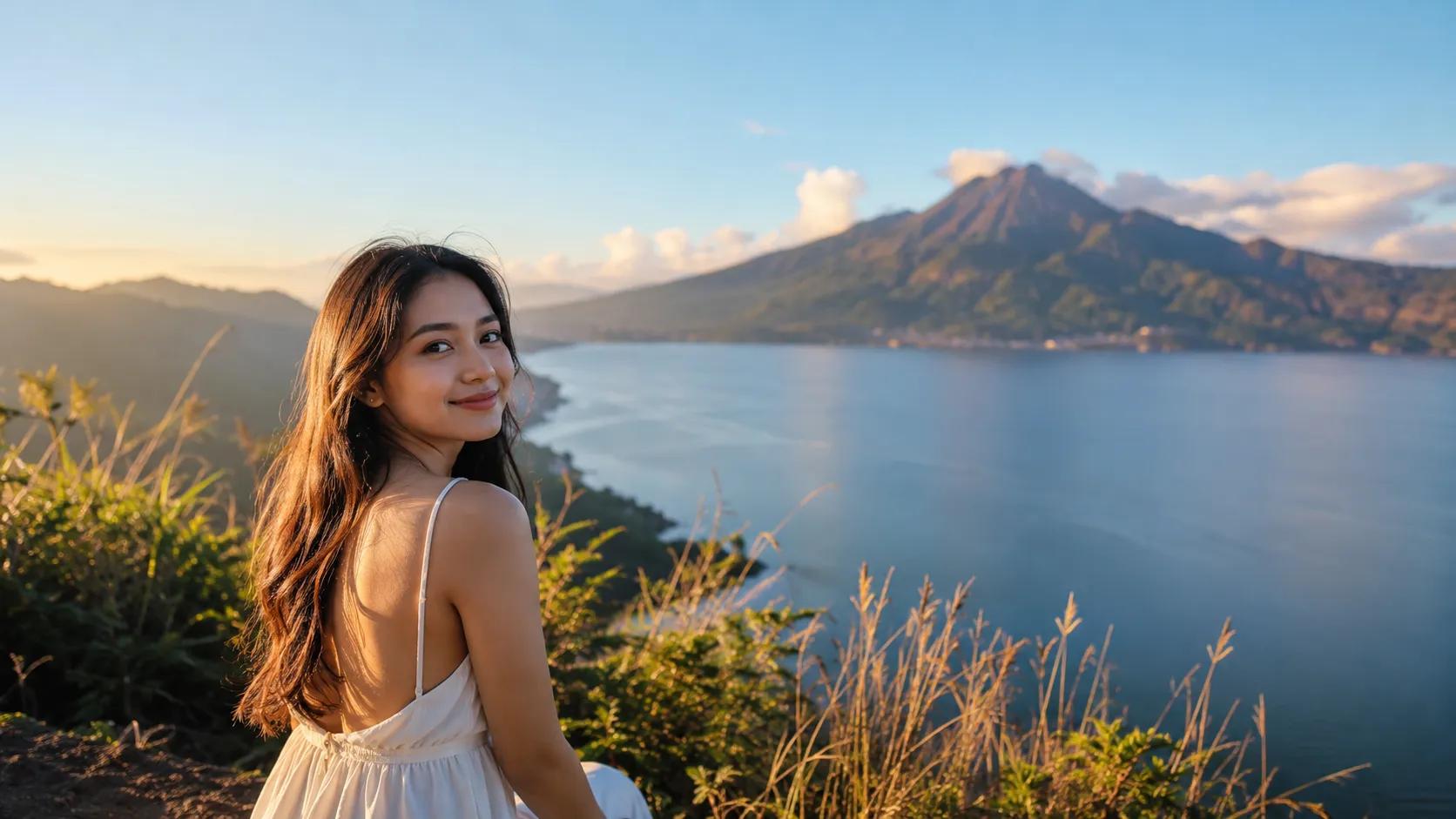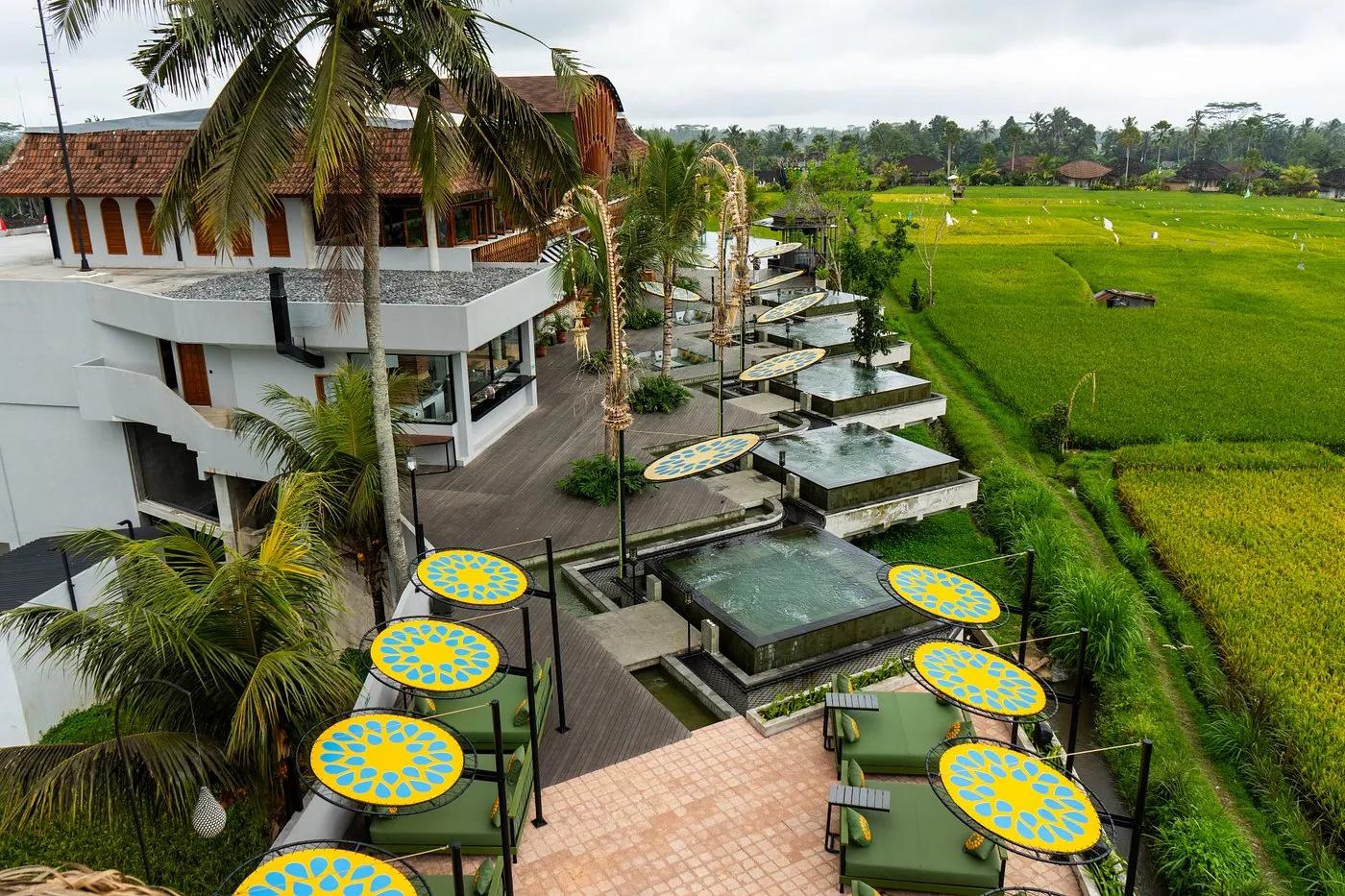
Bali's best-known hotels, villas and camps are not scattered randomly — they cluster into seven areas, and the area you pick decides everything. Ubud holds the largest concentration of jungle villas and boutique stays, Seminyak and Canggu hold the design hotels, Uluwatu and the Bukit hold the cliff-top resorts, Sanur and Nusa Dua hold the family and luxury resorts, and the best glamping in Bali sits in Tabanan, Selemadeg and Ubud itself. Pick the area for the trip you are actually taking.
Accommodation in Bali is unusually area-driven, and that is good news for planning. Unlike a city where the hotels are interchangeable, an area in Bali comes with a character: Ubud gives you temples and jungle in the morning, Canggu gives you surf and cafés at midnight, Nusa Dua gives you a swimming pool and nothing else. The hotel is the easy part. The area is the decision.
This is the full map — where the popular hotels, the private-pool villas and the best camping and glamping actually are, what each area is genuinely good for, and how to book the right one.
A note on the properties named here: these are the stays that come up repeatedly in Bali's best-of lists, and the prices are the published rates at the time of writing. Rates, names and even whole properties change, and the area guidance below holds regardless. Treat the names as orientation, not a booking list.
The accommodation map: four types, and where they live
| Type of stay | Where they cluster | Typical entry price | Best for |
|---|---|---|---|
| Luxury and clifftop resorts | The Bukit (Uluwatu, Ungasan), Nusa Dua | Rp 3,000,000+ per night | Honeymoons, families wanting a polished resort |
| Private-pool villas | Ubud's valleys, Canggu, Sidemen, the north | Rp 800,000–3,000,000 per night | Couples and groups wanting space |
| Boutique and design hotels | Ubud centre, Seminyak, Canggu | Rp 700,000–2,500,000 per night | Style, walking to town, good food |
| Camping and glamping | Tabanan, Selemadeg, Ubud, Kintamani, the north | Rp 300,000–2,000,000 per night | Nature, budget, a story to tell |
| Budget and guesthouses | Kuta, Legian, Canggu | Rp 250,000–700,000 per night | First-timers, longer stays, saving money |
The rule of thumb that saves the most money: in Bali you get more space per rupiah the further inland and north you go. A private-pool villa outside Ubud or in Sidemen costs less than a two-bedroom apartment on the beach in Seminyak, and you get rice fields instead of a bar queue.
Ubud: the largest concentration of villas and boutique hotels
Ubud has the widest spread of good accommodation on the island, from tiny guesthouses around town to the most talked-about jungle retreats in Asia. What matters is that Ubud is not one area — it is a ring of neighbourhoods, and the differences between them are real.
| Ubud neighbourhood | What it feels like | Who it suits | Drive to Ubud centre |
|---|---|---|---|
| Penestanan and central Ubud | Walkable, cafés, the market, the Monkey Forest | First-timers, short stays | Walking distance |
| Sayan and Payangan | Jungle valley, river, luxury compounds | Honeymooners, wellness | 10–20 min |
| Keliki and Payangan north | Total seclusion, jungle views, private villas | Couples who want nothing to do | 20–25 min |
| Celuk and Andong | Craft villages, quiet, cheaper | Families, long stays | 15–20 min |
| Sebali and Luhur | Deep valley, river, near Tegalalang | The most exclusive addresses | 25–30 min |
| Payangan and Bangsal | Local Balinese life, waterfalls nearby | Village travellers | 20–25 min |
The properties that come up again and again:
- Buahan, a Banyan Tree Escape — an adults-only resort set in the rainforest canopy in the village of Buahan, north of Ubud. It is the "sleep in the jungle" address that appears on every best-of list.
- The Sebali Resort — adults-only, in a rainforest pocket about a 13-minute drive from Tegalalang Rice Terrace, with private villas, freestanding tubs and infinity pools.
- Bisma Eight — on the outskirts of central Ubud, with Japanese-inspired suites and three restaurants.
- Kano Sari Ubud Villas — affordable luxury on the river, right next to working rice fields and a waterfall you can hear from the pool.
- Komaneka at Monkey Forest — a Balinese-style resort in the middle of Ubud, minutes from the Sacred Monkey Forest.
- Soulshine Bali — a sound and wellness resort with three pools (one with a waterslide and diving platform), garden rooms listed from around IDR 4.5 million and a penthouse from about IDR 7.1 million.
- Stone House Bali, Artotel Haniman, Weda Cita, Arya Arkananta, Sapodilla Ubud, Sabana Ubud (a short walk from Ubud Palace), The Kebun Indah Ubud (a private villa in the middle of town) and The Valerian Villa Ubud (near Saraswati Temple and Goa Gajah) cover the boutique and mid-range end, with Sapodilla offering a free shuttle into town.
What Ubud is not: there is no swimming beach in central Ubud, and the town is congested between 16:00 and 19:30. If you want a beach in the afternoon, stay in Ubud but plan to drive to one — our guide to the most visited areas explains why so many people split their stay instead.
Seminyak, Canggu and Petitenget: design hotels, beach clubs and villas
This is the fashionable strip, and the accommodation here is the most stylistically consistent on the island.
- W Bali, Seminyak — the standout for design: large contemporary rooms in whites and muted tones, and the biggest of the W properties in Asia.
- The Kayana, Seminyak — smaller and more romantic, with a frangipani-lined path to the room, a private garden and a plunge pool.
- Ametis Villa, Canggu — less a hotel and more a private luxury hideaway, with a living area, kitchen, private pool and a verandah.
- Serenity Eco Guesthouse, Canggu — the budget end, and genuinely good value: dorm beds from around GBP 6 and private rooms from about GBP 25, with daily yoga, a pool, massage, and an all-day vegan café. It is smoke- and alcohol-free, with the bars and restaurants a short walk away.
Why stay here: the restaurants are the best on the island, the beach clubs are on your doorstep, and everything is within walking distance of everything else. Why not: it is the most expensive area per square metre, the traffic out of it in the afternoon is the worst in Bali, and you are a long way from the inland half of the island.
Kuta and Legian: where Bali is still affordable
Kuta is no longer charming, but it is still the value play — and the guesthouses around Jalan Legian remain the cheapest comfortable base on the island.
The trade-offs are straightforward: you get the beach, the airport, surf schools and cheap food within walking distance, and in exchange you get the most commercial, loudest, most crowded part of the island. If the budget is the deciding factor, this is where the money goes furthest — and our getting around Bali guide covers the transfers from here.
Sanur and Nusa Dua: the resort coast
Two different products, both on the east side of the peninsula.
Sanur is the calm, family-friendly, flat coast. The luxury here is of the "spa, pool, harbour" variety rather than "cliff, sunset, butler":
- The Meru, Sanur — 184 suite-style rooms, tropical gardens and a wellness focus, in one of the oldest seaside towns on the island.
- Maya Sanur Resort & Spa — beachfront apartments stacked in a modernist style over pools.
Nusa Dua is the polished resort zone, with wide boulevards, deep swimmable water and beaches that stay empty because the day beds are for guests. The Laguna Resort & Spa is the address most people name here, with a series of pools and a spa; the peninsula also holds several of the island's largest international resort brands.
Who it suits: families who want a proper resort, older travellers, and anyone who wants a quiet beach within 30 minutes of the airport. What it is not: there is no local character here — no warungs, no ceremonies, no walking to anything interesting.
The Bukit Peninsula: Uluwatu, Ungasan and Bingin
The most dramatic accommodation on the island, and the most photographed.
- Alila Villas Uluwatu — villas on the cliffs, one to three bedrooms, with the Cliff Edge Villa running a 22-metre infinity pool and its own butler. The Warung does a refined take on the classic warung; Cire combines local flavours with Pan-Asian and Mediterranean cooking.
- Umana Bali, LXR Hotels & Resorts — perched 70 metres above the limestone cliffs of Ungasan, with 72 villas, each with a private infinity pool and a jetted tub, and a dedicated shuttle to Melasti Beach.
- The Ungasan Clifftop Resort — a clifftop member of Small Luxury Hotels of the World, high above the ocean on the Bukit.
Why the Bukit is worth the drive: you get the Uluwatu Temple and the Kecak fire dance at sunset within the same afternoon, some of the island's best surf at Bingin and Balangan, and dramatic clifftop restaurants. Why it is not a base for a whole trip: it is far from the airport and far from Ubud, and there is very little to do in the middle of the afternoon. Two or three nights is right.
Sidemen and the east: quiet, traditional and the best value
The east coast gets skipped, and it is where you get the most room for your money and the least development.
Sidemen is a river valley of working rice terraces and weaving villages, with a handful of good guesthouses and small hotels that cost a fraction of the south coast. Alassari Plantation, out at Selemadeg, is the off-grid example done well: a bamboo treehouse or a Javanese wooden villa, an outdoor pool, a spa with personalised massages, morning yoga, free laundry, and activities including mountain trekking, Balinese cooking classes and visits to local healers, with full-moon ceremonies you can attend if the dates align. It is described as a narrow south-western stretch away from the coastal hustle, and it works well for families.
Why stay here: quiet, cheap, traditional, and a genuine change of pace after the south. Why not: no nightlife, no big beaches, and a long drive from the airport.
The north: Munduk, Lovina and Pemuteran
The north has the lowest density of famous hotels and the best nature.
- Sun Suko Boutique Resort & Yoga Retreat, Pemuteran — ten Javanese wood houses arranged around a central pool, with open-air showers, outdoor terraces, Balinese furniture with contemporary art, and a healthy menu drawn from local cuisine. It is built for escaping, and it is the best-known address in the north.
- Munduk — jungle and lake-view lodges, a short drive from the waterfall country and the Sekumpul valley.
- Lovina — the calm, inexpensive coast, and the base for the sunrise dolphin trips.
Why it suits you: if your trip is about waterfalls, diving, turtles and quiet rather than restaurants and shopping, the north is the correct choice and it costs less. Why it is hard: it is two and a half to three hours from Ubud, so it works as a two-night stop, not a day trip. Read our hidden gems guide before you commit.
Camping and glamping: where the camps actually are
Camping in Bali comes in three distinct flavours, and they are not interchangeable.
1. Tented camps with real facilities
Bali Jungle Camping, Tabanan is the reference point for this category — and the reason it works is the detail, not the tent. Your "casa" is a geodome with a canopied bed and access to a private bathroom with toiletries, an outdoor fireplace, a terrace and a garden. On site there is yoga, a traditional Balinese restaurant and bike hire. It sits in a jungle setting in Tabanan, in the stretch of countryside between Ubud and the west coast. The honest trade-off: the Wi-Fi is patchy, which is the point for some people and the deal-breaker for others.
2. Luxury "glamping" resorts
These are proper resorts with tents, and they are the fastest-growing category in Bali.
- Ubud Tropical — the most useful example for most people, because it is affordable: from about Rp 459,000, with air-conditioned tents, a queen-sized bed, an LED TV, a private bathroom and a personal terrace, plus a shared double infinity pool against the jungle. It also has dorm-style rooms, a communal kitchen and a common area, so it works for a group on a budget.
- Alassari Plantation, Selemadeg — the barefoot-luxury end, described above.
3. Expedition-style camping on the volcano
Camping on the slopes of Mount Batur, with a permit, a guide and equipment, is a different experience entirely: you sleep near an active volcano, wake in the cold at 02:00 and climb in the dark for sunrise. Our full guide to camping in Kintamani covers the spots, the permits, the costs and the safety, and the Kintamani attractions guide covers what to do around it.
| Camping style | Where | What you get | Typical price band |
|---|---|---|---|
| Luxury glamping resort | Tabanan, Selemadeg, Ubud | Private tent or treehouse, bathroom, pool, yoga, restaurant | Rp 1,200,000–3,000,000 per night |
| Affordable glamping | Ubud and the south | AC tent, private bathroom, terrace, shared pool | Rp 300,000–800,000 per night |
| Tented camp with facilities | Tabanan, Sidemen, Munduk | Geodome or safari tent, bathroom, fireplace, meals | Rp 400,000–1,200,000 per night |
| Volcano camping | Kintamani, Mount Batur | Tent, permit, guide, equipment, meals | Rp 700,000–2,000,000 per night |
| Beach camping | Nusa Dua, Pemuteran, Sanur | Simple tent, often just a mat and a fire | Rp 200,000–700,000 per night |
Five things to check before you book any camp:
- Is there a real bathroom? Most do not, and "shared facilities" at 2 am is a different thing from an en-suite.
- Is the site legal and permitted? Some camps operate on land without proper permission and can be moved on.
- What is the access road like? A narrow village road or a 20-minute track on a scooter changes the value completely.
- Is there power, and is it reliable? Camps run on generators; ask what happens when it rains.
- What happens in the rain? The wet season turns a great campsite into a wet one. Ask for a covered area or a backup plan — this is why our 2027 scheduling guide puts camping in the April-to-September window.
Which area matches which kind of traveller
| Traveller | Best area | Second choice | Avoid |
|---|---|---|---|
| First-timer | Ubud | Sanur | Kuta, if you want charm |
| Couple wanting romance | Ubud valleys or the Bukit | Sidemen | The middle of Canggu on a Saturday |
| Family with young children | Sanur or Nusa Dua | Ubud | The Bukit, for the cliffs |
| Family with older children | Ubud | Sanur | Isolated camps with no backup plan |
| Group of friends | Seminyak or Canggu | Kuta | A quiet resort with no nightlife |
| Solo traveller | Canggu | Ubud | Isolated villas with long transfers |
| Surfer | Canggu | Uluwatu | Nusa Dua (no waves) |
| Luxury holiday | The Bukit or Nusa Dua | Ubud | Kuta |
| Budget, long stay | Kuta or Canggu | Sidemen | Nusa Dua |
| Nature and quiet | The north or Sidemen | Munduk | The Bukit |
| Budget with a story to tell | Tabanan glamping | Kintamani camping | — |
Price bands: what to expect in 2027
| Area | Budget | Mid-range | Luxury |
|---|---|---|---|
| Kuta and Legian | Rp 250,000–600,000 | Rp 700,000–1,200,000 | Rare |
| Ubud | Rp 400,000–900,000 | Rp 1,200,000–2,500,000 | Rp 3,000,000+ |
| Seminyak and Canggu | Rp 600,000–1,200,000 | Rp 1,500,000–3,000,000 | Rp 4,000,000+ |
| Sanur | Rp 700,000–1,400,000 | Rp 1,500,000–3,000,000 | Rp 4,000,000+ |
| The Bukit | Rp 900,000–2,000,000 | Rp 2,500,000–5,000,000 | Rp 6,000,000+ |
| Nusa Dua | Rp 1,200,000–2,500,000 | Rp 3,000,000–6,000,000 | Rp 7,000,000+ |
| Sidemen and the north | Rp 350,000–800,000 | Rp 900,000–1,800,000 | Rp 2,000,000+ |
| Camping and glamping | Rp 300,000–800,000 | Rp 900,000–2,000,000 | Rp 2,500,000+ |
Two rules that will save you more money than any deal-hunting: the dry season (April to October) is at its most expensive in July and August, and December and January are the other peak. Staying in May, June or September typically costs 30–50% less than August for the same room.
How to book, and what to check before you pay
How far ahead:
- July, August, December and the Nyepi fortnight (6–10 March 2027): four to six months, and take the best villa in Ubud first.
- May, June, September and October: two to three months.
- February and November: a few weeks is usually fine, though the good Ubud villas still go early.
What to confirm before you pay:
- Is the transfer included? A Ubud villa that looks cheap becomes expensive with a Rp 450,000 airport transfer each way.
- Is breakfast included? Often it is not, and a Ubud breakfast runs Rp 100,000–200,000 for two.
- Is there a shuttle into town, and how often? For Ubud and Sidemen this matters more than the pool.
- How far is the beach? "Beachfront" in Bali marketing can mean a five-minute scooter ride through traffic.
- What is the road like at night? Unlit access roads with a scooter and no phone signal are a real issue in the villages.
- Is the building legal? Ask for the property's PIT or IMB permit. Illegally built rooms get demolished, and this is not theoretical in Bali.
- Read the recent reviews, not the top ones. Look specifically for comments about noise, power and hot water.
Frequently asked questions
Where is the best area to stay in Bali?
Ubud, for most people and most first trips — it is the most central, the most interesting and the best base for the inland activities. Choose Sanur for a calm family beach, Seminyak or Canggu for restaurants and nightlife, the Bukit for dramatic resorts, and the north for nature and quiet.
Where should I stay in Bali with children?
Sanur by a clear margin: shallow calm water, flat promenades, good-value family hotels and the shortest airport transfer. Nusa Dua if you want a full resort. Ubud if your children are old enough for temples, cooking classes and animal encounters rather than swimming.
Where do the best villas in Bali sit?
The Ubud valleys — Sayan, Payangan, Keliki and Sebali — with private infinity pools in jungle and river settings. Canggu and Sidemen are the other two villa concentrations, and the north around Munduk and Pemuteran has the best value per rupiah. Avoid assuming a villa is near the beach: most of the best ones are inland.
Is glamping in Bali worth it?
It depends entirely on which version you book. Luxury glamping with a private bathroom, terrace, pool and restaurant is a genuinely good way to sleep in nature with none of the difficulty, and Ubud Tropical shows it can be affordable. Basic tent camping is a different product: cold, wet in the wet season, and shared facilities. Read the specification carefully rather than the word "glamping".
Where can I go camping in Bali?
The three main options are Tabanan for comfortable tented camps with facilities, Kintamani and Mount Batur for volcano camping with a permit and guide, and the north or Pemuteran for beach and jungle camping. Selemadeg in the west adds the off-grid plantation style. Our camping guide to Kintamani has the full detail on permits, costs and safety.
Is it cheaper to stay in the north than in Ubud?
Yes, usually noticeably — the north has fewer international hotel brands and less demand from the airport transfer route. But add two and a half to three hours of driving each way to the price. It works as a two-night stop at the end of a trip, not as a base.
Should I book a villa or a hotel?
A villa if you want a pool, space and privacy — especially for couples and families, and especially in Ubud or Sidemen. A hotel if you want service, a restaurant on site and someone else to handle the logistics, or if you are staying somewhere with good transport links. Hotels win on service; villas win on space and atmosphere.
What is the best month to book a Bali hotel?
May, June or September give the best balance of weather and price. February is the cheapest and quietest. Book early for July, August, December and January, and remember that Ubud's best villas are the first thing to go.
How far ahead should I book for the July and August peak?
Four to six months for the best villas in Ubud, Canggu and the Bukit, and the same for a room over Christmas. If you are travelling in July or August and your dates are fixed, book the accommodation first, then the flights, then the activities.
Tell us where you want to stay and we will plan the days around it
Tell us your dates, your budget and the kind of trip you are taking — a couple's retreat, a family week, a surf trip, a camping night on the volcano — and we will recommend the area that fits, the activities that work from there, and the transfers that connect it. We will confirm the activity slots and the pickup points in one message.
Message us on WhatsApp at +62 851-7516-3718 — or book online. or browse the activities first and book directly online.
Tours to try in Bali
The tours we run ourselves, straight from the catalogue. Pay on arrival, free cancellation, and a WhatsApp reply within the hour.