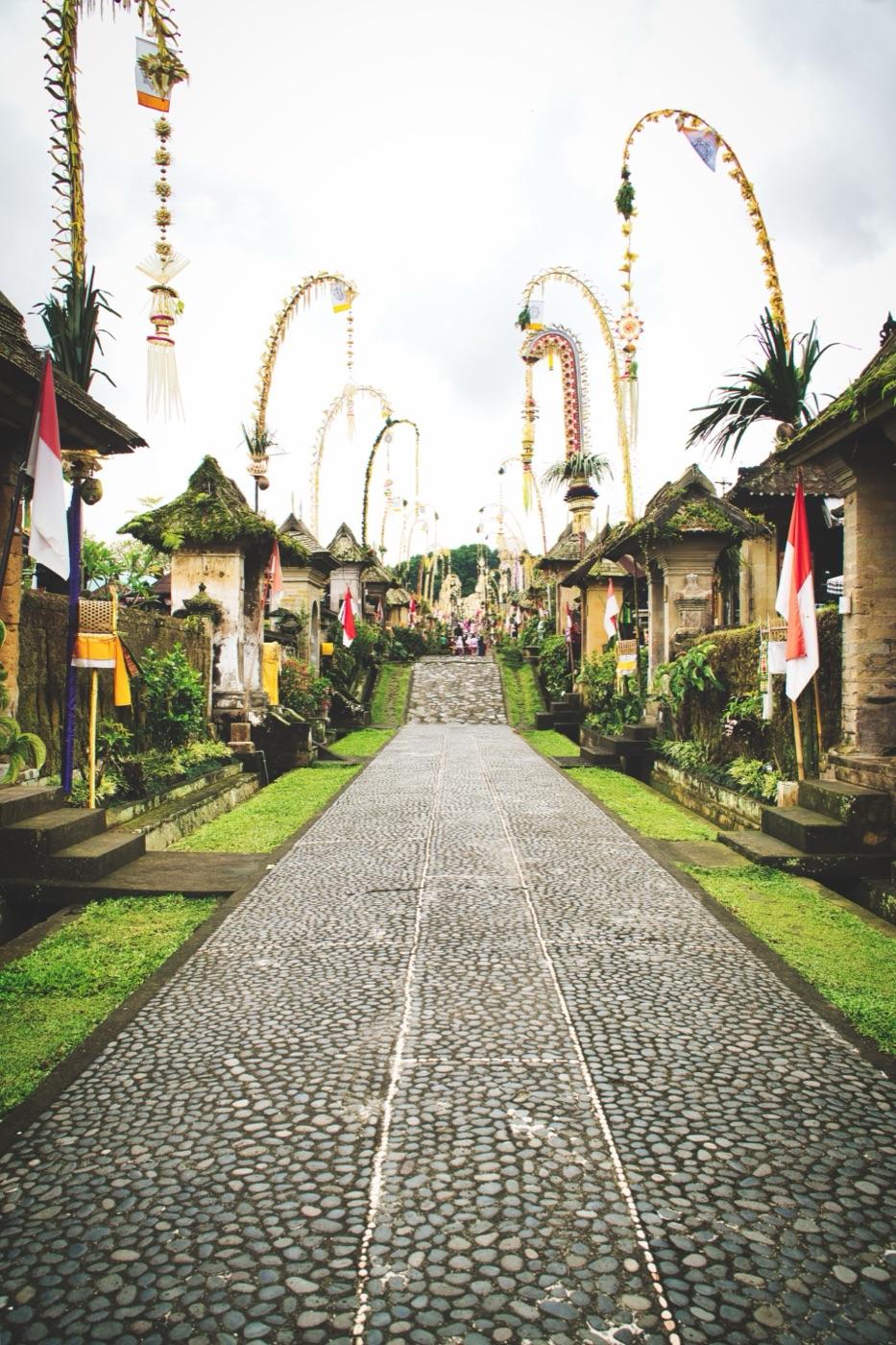
Ubud is not one place, it is six neighbourhoods spread over 42 square kilometres, and the single biggest mistake visitors make is booking a hotel before deciding which part of Ubud they want. The centre by the palace gives you warungs, the art market and the Monkey Forest on foot. Penestangan gives you the coffee and the better kitchens. Campuhan gives you the cafés and the Sunday market. The bypass gives you big dining rooms and easy transport. Sayan gives you the view. And the outer ring — Payangan, Tegalalang, the Wos valley — gives you jungle, rice fields and silence. This guide picks a base, names the hotels and restaurants worth booking, lists the sights with their real opening hours and entrance fees, and explains where to buy souvenirs without paying tourist prices for them.
Ubud is called the Capital of Culture of the World, and it earns the title by accident rather than by marketing. It is the northern part of the Greater Denpasar metropolitan area, a town of about 74,800 people that draws more than three million foreign visitors a year. Its name comes from the Balinese word ubad, medicine — the place was a source of medicinal herbs long before anyone thought of selling art to tourists.
The history explains the way the place behaves. A Spanish-American painter, Antonio Blanco, lived in Ubud from 1952 until his death in 1999. The 1960s brought the Dutch painter Arie Smit and the Young Artists Movement, and the tourist boom that followed turned a market town into an arts centre. When the 2002 bombings hit Bali and tourism collapsed, the Ubud Writers and Readers Festival was created specifically to bring visitors back. The result is a place with the density of a creative town and the rhythm of a village, which is exactly why you should pick your neighbourhood before you pick your hotel.
The six Ubuds, and which one you want
| Area | What it is | Best for | Watch out for |
|---|---|---|---|
| The centre | Around Ubud Palace and the art market | Walking to everything, warungs, the cheapest plates | Noisy, no air conditioning, crowded at night |
| Penestangan | A strip five minutes north of the centre | Coffee, brunch, the better kitchens, easy walking | Almost no cheap food |
| Campuhan | West of the centre, below the ridge | Cafés, the Sunday market, green and quiet | You need a scooter or a driver to do anything else |
| The bypass | The main road out of town | Big dining rooms, long menus, easy transport | The most touristy layer; the priciest |
| Sayan | Down the valley to the south-west | Sunset views, river restaurants, a dinner that matters | Far from the centre; you need a driver |
| The outer ring | Payangan, Tegalalang, the Wos and Petanu valleys | Jungle, rice fields, silence, value for money | Almost nothing within walking distance |
Ubud sits 22 km from the airport, and the drive takes 60 to 90 minutes in normal traffic. From Kuta it is 35 km and closer to two hours. That distance is why the choice of base matters so much: a hotel in Sayan is a different trip from a hotel beside the art market, and each has a different daily rhythm.
Where to stay in Ubud: the picks, by area and by budget
These are the stays that come up again and again when Ubud hotels are compared, with what each one is actually good for rather than a star rating.
In the centre, on foot from the palace
- Sabana Ubud — a four-star hotel in the village of Pengosekan, just south of the centre and close to Ubud Palace. Four-poster beds, balconies over the outdoor pool, and a front door in temple colours. It is the pick if you want the walkable town without paying for the jungle.
- Artotel Haniman — a modern mid-range boutique with 22 rooms, minimalist interiors and hand-painted Balinese murals, plus a desk in every room for anyone working remotely. A short stroll from the Monkey Forest, the Yoga Barn and Pura Taman Sari. Rooftop garden, on-site café, spa, private balconies.
- Stone House Bali — minutes from downtown, and rustic in the best sense: glass walls, canopied beds, outdoor bathrooms, Javanese puppets and Indonesian textiles. It has no spa, no gym and no yoga studio, and the service is what makes up for it. The complimentary breakfast is homemade breads, spicy omelettes, tofu scrambles and fresh-pressed juices at a communal table.
- Kano Sari Ubud Villas — originally designed as a family residence, now six suites around a tranquil pool in lush gardens above the Jero Gadung River gorge, with in-house masseuses. Five minutes from the palace and the market, ten minutes more to the Monkey Forest.
- Bisma Eight Hotel — a five-star on the outskirts of central Ubud with an infinity pool over the forestland and 38 Japanese-inspired suites with four-poster beds and a cedarwood bathtub. Three dining concepts in house: Mori for Japanese teppanyaki, Embers for Mediterranean, and the Copper Kitchen Bar & Rooftop.
On the edge of the centre, with jungle views
- Buahan, a Banyan Tree Escape — an adults-only resort built into the rainforest canopy, sixteen open-air bales designed on a "no-walls, no-doors" concept, each with 180-degree views of jungle and mountain peaks and a private pool. There is a Traditional Elixir Jamu experience where you learn to brew the tonic.
- The Kastara Resort in Keliki — an upscale resort on the outskirts where the outdoor deck is shaped like a traditional boat, looking over the valley and the Wos River, with open-air bathtubs and jungle views from the bed. Less than fifteen minutes from the Blanco Museum, Saraswati Temple and the Campuhan Ridge Walk.
- The Weda Cita Resort and Spa — a pool surrounded by towering palms and banana trees with views of a spring-water temple, a sixteen-minute walk from the Monkey Forest, and a spa that does full-body treatments and aromatherapy with locally sourced ingredients.
- The Arya Arkananta Resort and Spa — Gladak and Joglo houses converted into private villas and suites, cobbled paths, manicured gardens and a fitness centre. It runs cycling tours, cooking classes and meditation on site, and sits close to Saraswati Temple.
- The Ridge — an adults-only retreat of five private villas overlooking the Ayung River. Small, and the point is that it is small.
Out in the rice fields and the river valley
- Kano Sari Ubud Villas (above) and The Sebali Resort — the Sebali is a boho-chic, adults-only sanctuary in the rainforest for singles, couples and families with teens 15 and above, a thirteen-minute drive from the Tegalalang rice terraces. Each villa has a marble bathroom with a freestanding tub, an infinity pool and a sun-drenched deck; the arrival is a wooden bridge over a ravine, and the terrace looks over the Petanu River Valley and misty peaks.
- Anantara Ubud Bali Resort — looking out over the lush Payangan rainforest.
- The Valerian Villa Ubud, Ubud Tropical and The Kebun Indah Ubud fill out the mid-market of the outer ring, with Sapodilla Ubud sitting on the edge of the centre with four-poster beds, mosquito-net draped terraces over an outdoor pool and a complimentary shuttle to nearby attractions.
For the price-led traveller
- Soulshine Bali is the name to know, because it publishes its rates. It is Bali's first sound and wellness resort, founded by the musician Michael Franti, and it runs from IDR 4,475,758 for a Garden Room to IDR 7,098,433 for the Panorama Penthouse, with a John + Yoko Pool Suite in between. Three pools — one with a waterslide and a diving platform — two restaurants, a full-service spa, two yoga areas and 33 rooms, 17 of them suites. Its Soulrocker Retreat is a seven-night stay with live music, daily yoga, workshops, a DJ night and farm-to-table food.
Four questions that settle the base
- How many evenings do you want to walk home? If the answer is "most", take the centre or Penestangan. If it is "none", take Sayan or the outer ring and budget for a driver every day.
- Do you need air conditioning? The warungs and the centre are hot and mostly uncooled. If you are sensitive to that, choose Penestangan or the bypass rather than the cheapest room in the centre.
- Are you staying for the yoga and the spa scene? Then the outer ring wins on both value and quiet.
- Do you have a flight out of an evening slot? Sayan and the outer ring are 45 to 75 minutes from the airport at the wrong hour. Our guide to getting around Bali has the real drive times.
Where to eat: the popular places, and what each one is actually good for
Ubud's restaurant scene splits cleanly into the places worth booking and the places worth simply walking into. Our Ubud food guide covers the warungs, the five food neighbourhoods and how to order without a menu. This is the other half — the named kitchens, with their addresses and hours.
| Restaurant | Address | Hours | What it is |
|---|---|---|---|
| Locavore NXT | Jl. A.A. Gede Rai Gang Pura Panti, Lodtundang | Mon–Wed 5.30–8.30pm; Thu–Sat noon–1.30pm and 5.30–8.30pm; closed Sunday | A 20-course tasting menu built on hyper-local, often foraged ingredients |
| Night Rooster | Across the road from Locavore | Check before you go | Pre- and post-meal drinks; the sister venue to Locavore |
| Ayung Terrace | Four Seasons Resort Bali at Sayan, Sayan | Daily 6.30–10pm | Long lunches above the treetops, over the rainforest |
| The Swept Away Restaurant | By The Samaya Ubud | Check before you go | A destination dinner rather than a casual one |
| Monsieur Spoon | Jl. Hanoman No.10 | Daily 7am–9pm | French bakery: almond croissants and pain au chocolat at IDR 52,000, quiche lorraine at IDR 79,000 |
| Seniman Coffee Studio | Jl. Sri Wedari No.5, Banjar Taman Kelod | Daily 7.30am–10pm | "Ubud's innovative coffee lab" — single-origin beans, hand-poured brews, in-house roastery and workshop; cold brews at IDR 48,000 |
Two practical notes. Locavore NXT is closed on Sundays, which is the one night of the week when it would be most convenient — plan around it rather than turning up. And Monsieur Spoon and Seniman open early, at 7am and 7.30am, which makes them the easiest breakfast in town when the warungs have already sold out of the good plates.
The places that are not restaurants
- The warungs around the palace and the market are where nasi campur and sate lilit cost what they should. The Ubud Art Market fills the streets beside the palace every evening, with the handicraft stalls at the front and the food stalls at the back.
- The traditional produce market runs roughly every three months on a Sunday. It is the most genuinely local thing in the centre — produce, spices, food stalls, and the people who actually shop there. Go early, and check the dates before you travel.
- The night market question: Ubud has no single permanent night market like some towns. It has the evening food stalls at the art market plus rotating weekend pop-ups in empty shopfronts, announced locally and changing weekly. Your accommodation will know what is on.
- Warung Babi Guling-style pig roast in the small warungs around the centre, which have been turning the spit for decades.
- The coffee and the vegetarian scene. Ubud has one of the largest plant-based food scenes in Asia, mostly in the cafés around Penestangan and Campuhan. Our vegetarian and vegan guide covers ordering it safely.
Wellness and the outdoors, if you want a day that is not about food
- The Yoga Barn and Radiantly Alive are the two studios that battle it out for the title of Ubud's premier yoga studio. Both attract teachers you would otherwise have to travel for.
- Tamiang Spa is one of the most affordable enriching spa experiences in Bali.
- Bali Bird Walks runs guided birding with an expert local guide through the paddies, forested canyons and jungle temples — home to close to 350 bird species.
- The Ayung River runs within a stone's throw of Ubud town. White-water rafting is the obvious way to see it, and Mason Adventures can pair the rafting with cycling.
The popular attractions: what to see, when it opens and what it costs
| Attraction | Address | Hours | Note |
|---|---|---|---|
| Ubud Palace | Jl. Raya Ubud No.8, Ubud, Gianyar 80571 | Daily 7am–6pm | The royal residence; dance performances in the courtyard |
| Sacred Monkey Forest | Padangtegal | 9am–6pm, last entry 5pm | Adult IDR 130,000, child IDR 100,000 |
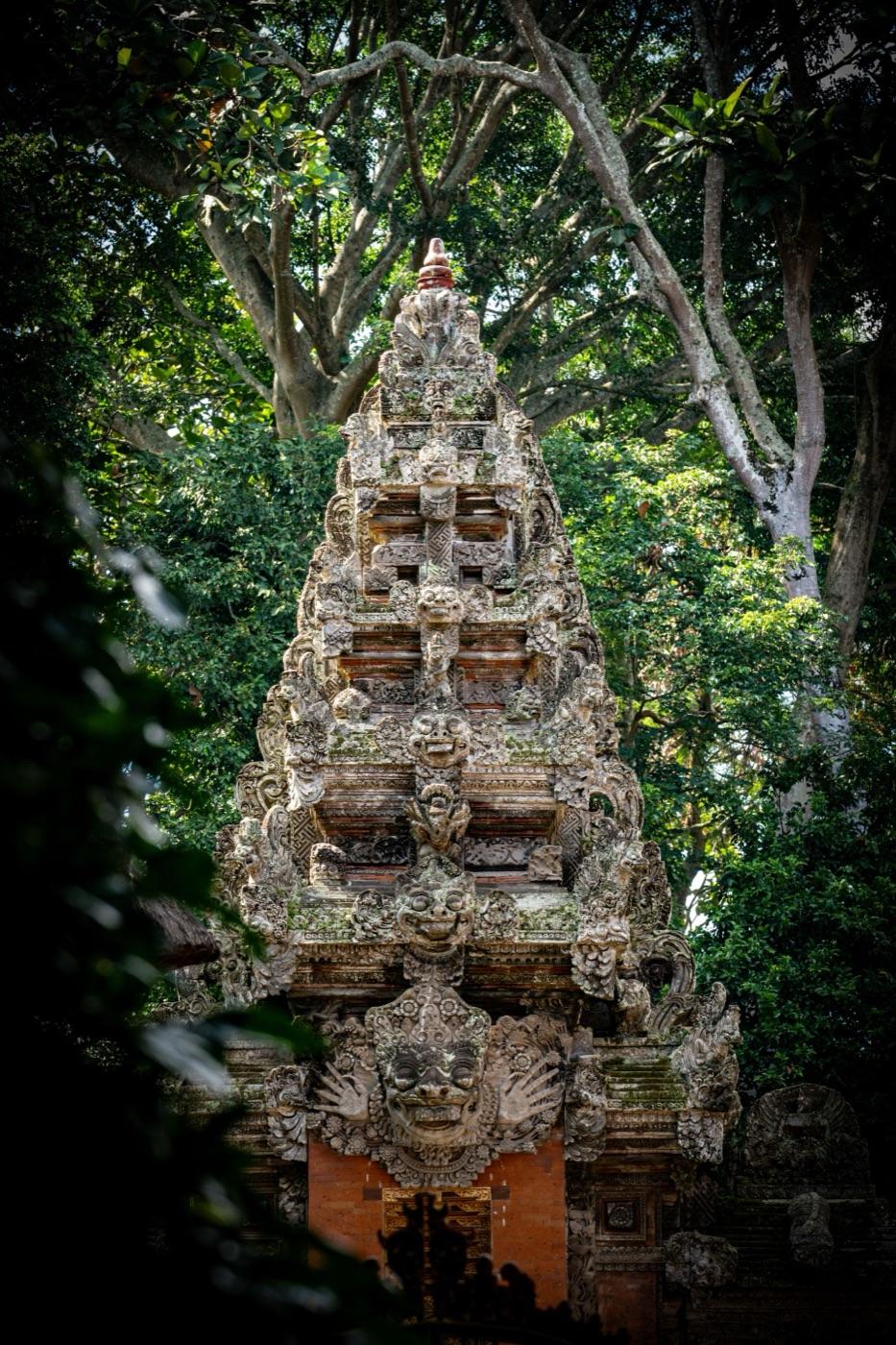
| Pura Saraswati | Jl. Kajeng, Ubud 80571 | Daily 7am–5pm | Lotus pond, orange walls, golden carvings |
| Pura Tirta Empul | Tampaksiring, Bali 80552 | Daily 8am–6pm | The purification water temple, 15 minutes north |
| Goa Gajah (Elephant Cave) | Jl. Raya Goa Gajah, Bedulu, Blahbatuh 80581 | Daily 8am–6pm | 15 minutes from Ubud |
| Pura Mengening | Jl. Tirta No.25M, Tampaksiring 80552 | Daily 9am–5pm | 11th century, quieter than Tirta Empul |
| Agung Rai Museum of Art | Jl. Raya Pengosekan, Ubud 80571 | Daily 9am–6pm | 1930s local painters to contemporary Balinese and international artists |
Ubud Palace and the Monkey Forest
Ubud Palace (Puri Saren Agung) sits at the junction of Monkey Forest Road and Jalan Raya Ubud, and it is still the home of the royal family. It was the residence of Tjokorda Gede Agung Sukawati, the last ruling monarch of Ubud, who died in 1978. The palace was also one of Ubud's first hotels, opening its doors back in the 1930s, and its courtyard is where the dance performances are held. You can walk in during opening hours; you cannot take a photograph inside the inner compound, and the guards will tell you so.
The Sacred Monkey Forest Sanctuary is the reason most people come to Ubud, and it is also the most misunderstood. It is a nature reserve and temple complex, not a zoo: 12.5 hectares of forest holding 186 species of trees and more than a thousand long-tailed macaques who are considered sacred by the local Balinese. The adult entrance fee is IDR 130,000 and the child fee IDR 100,000, and the gates run from 9am to 6pm with last entry at 5pm. The macaques are semi-wild, not domesticated pets, and the sanctuary publishes its own guidelines for a reason: anything that happens outside them is at your own risk. Do not feed them, do not look them straight in the eye, do not walk in front of a dominant male, and do not carry loose plastic bags or sunglasses. The map includes the main temple, the holy spring temple, the cave, the dragon bridge, a wooden path and an exhibition room.
The ridge walk and the subak trails
Campuhan Ridge Walk is a one-metre-wide paved-block track that runs about two kilometres to the top of the hill, where the Tukad Yeh Wos Kiwa and the Tukad Yeh Wos Tengen merge. It is free, it is the classic Ubud sunset, and it is busy.
It is also the least interesting version of the walk. The better version is north of it, along the subak trails: follow Subak Sok Wayah northwards and you walk through a patchwork of paddies with a string of small cafés to keep you going, and you can turn it into a loop by crossing a narrow valley shortly after you pass Sunset. This is the walk to do if you want a rice-terrace morning rather than a hilltop selfie.
The water temples
Pura Tirta Empul is Bali's answer to a sacred spa day. This ancient Hindu water temple, built in 962 AD, is dedicated to Vishnu, the god of water, and its natural spring — said to be the elixir of life — feeds thirty waterspouts into two sacred purification pools. It is fifteen to twenty minutes north of Ubud, and it is busy at the same hours as everything else in Bali: get there for opening.
Pura Mengening is the quieter alternative, and arguably the better one. It is an eleventh-century temple built under King Anak Wungsu, dedicated to Dewa Tirta Empul, and it feels like stepping into a secret garden rather than joining a queue.
Our Tirta Empul spiritual tour covers the sequence of the purification ritual properly, including what you are supposed to do at each of the spouts and how to bring your own sarong.
Goa Gajah and the Museum
Goa Gajah, the Elephant Cave, is fifteen minutes from Ubud in the valley near Bedulu. It is over a millennium old, reflects both Hindu and Buddhist elements, and was lost to time until Dutch archaeologists rediscovered it in 1923. It is thought to have been built by the Warmadewa Dynasty between the 10th and 14th centuries, and it has both above-ground and subterranean structures. The approach through the forest and the bath at the entrance are the best parts.
Agung Rai Museum of Art is one of Bali's best fine-art museums, with a collection that runs from the local painters of the 1930s through contemporary Balinese and international artists. It opens daily from 9am to 6pm.
The sights beyond the town centre
- Tegallenang Rice Terraces — the famous one, and the reason the outer ring has hotels at all.
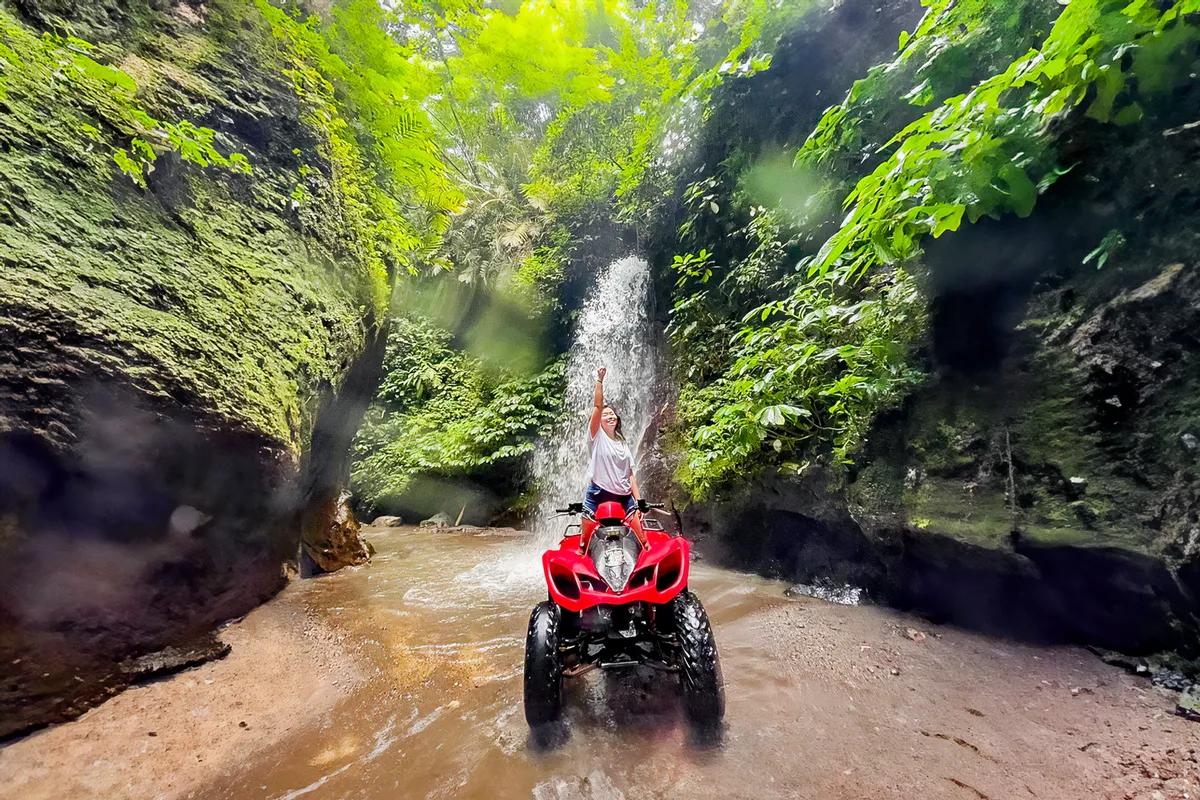
- Tegenungan Waterfall, a 15-metre drop and the most popular for a reason: it is close to Ubud.
- Nungnung Waterfall — more spectacular, and you get there down a return trip of about a thousand steps into an unspoiled gorge.
- Sekumpul Waterfall — on the north side of the island, where you cool off in a pool formed by a grouped cascade. Our Jatiluwih rice terraces guide covers the best of the rice terrace country east of Ubud.
- Sidemen village — the drive across the countryside from Ubud is one of Bali's most beautiful roads, and the village itself is the sort of rural hideaway that evokes what Ubud was before the tourists arrived. Walter Spies, the artist who made Ubud famous, built a villa there in the 1930s to escape the crowds. It is now a base for people who want Ubud's culture without Ubud's traffic.
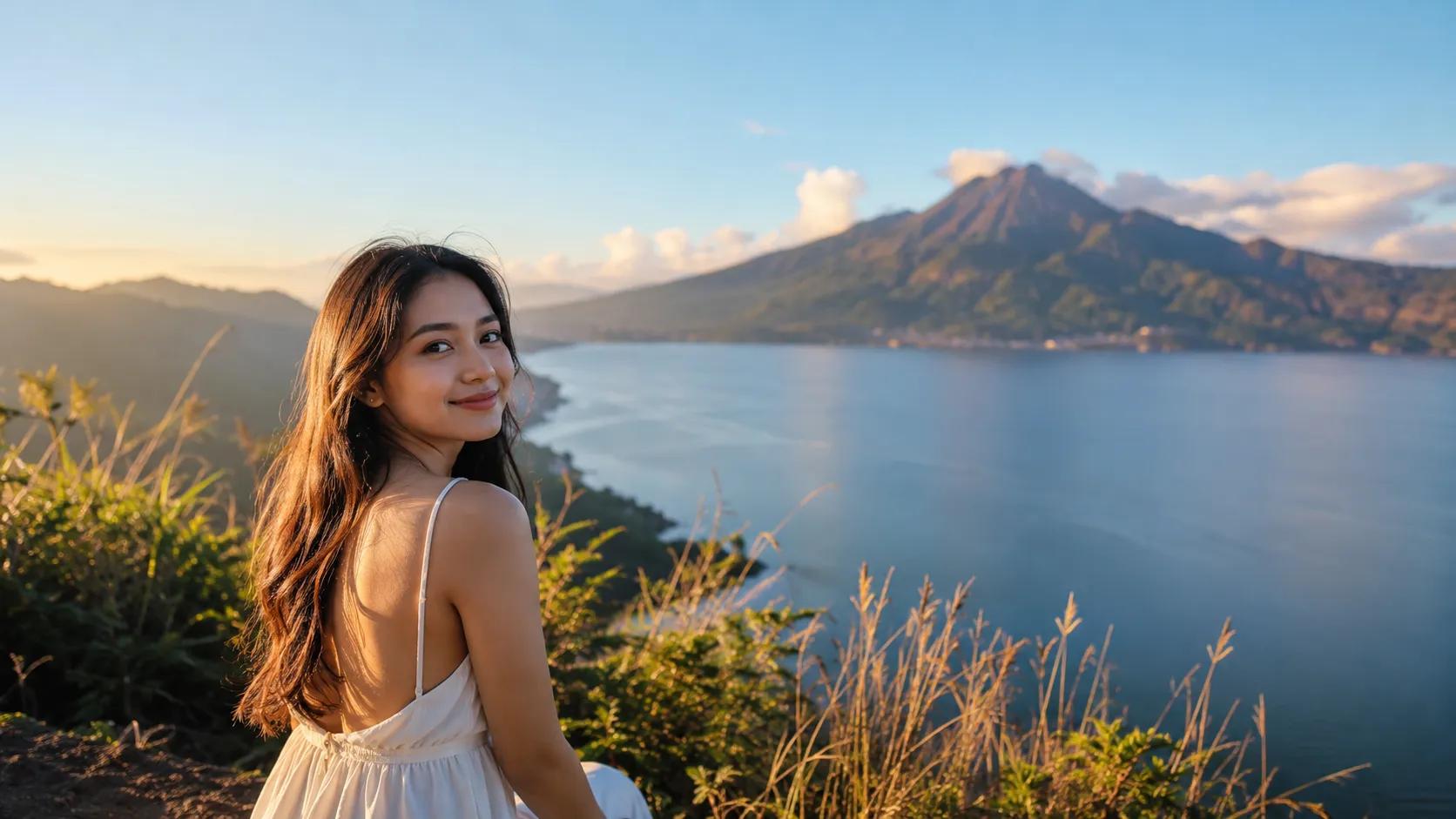
- Mount Batur — the sunrise trek and the lake, which is an hour and a half to two hours from Ubud in traffic. The Mount Batur jeep tour covers the route.
- The Moon of Pejeng, in nearby Pejeng, is the largest single-cast bronze kettle drum in the world, dating from around 300 BC. Almost nobody goes, which is why it is worth going.
Our longer things to do in Ubud guide covers the cultural and adventure side in more detail.
Where to shop for souvenirs, and what to actually buy
Ubud's economy leans on tourism, with shopping, resorts, museums, yoga and the arts at the centre of it — and there is a strong push toward sustainable retail, with many Bali-grown brands choosing materials and ingredients that do not create much waste. You can see it in the shops: home and living pieces, tropical clothing, and a lot of things made by people whose names are on the work.
The four places to shop
- The Ubud Art Market, beside the palace. It fills the streets every evening, and it is the best one-stop answer to "what do I buy in Ubud". The handicraft stalls are at the front, the food stalls at the back. Expect to negotiate, expect the same item in twenty stalls at twenty prices, and expect the first price to be roughly triple what the item is worth.
- The galleries and shops along Jalan Raya. The art houses are where the serious work is — larger pieces, better quality, and prices that reflect it. This is where you buy something you would actually put on a wall.
- Jalan Hanoman and the Penestangan strip. Smaller boutiques, textiles, jewellery, homewares, and the newest Balinese brands. This is the best area to browse rather than buy on impulse, because the quality is high and the pressure is lower.
- The Sunday Campuhan Market along the ridge, and the traditional produce market when it comes round. The Sunday market is the better place for textiles, baskets and small goods, because the sellers there are not competing with the art market.
What to buy
| Souvenir | What to look for | Where it is best |
|---|---|---|
| Batik and textiles | Hand-drawn, not printed; the edges are the tell | Galleries on Jalan Raya, the Sunday Campuhan market |
| Wood carving | Carved by hand, with tool marks; check for dry wood and strong smell | The art market, the outer-ring villages |
| Rattan and baskets | Even weaving, no plastic; a cooperative workshop is better than a stall | Penestangan, the outer ring |
| Silver jewellery | A stamped hallmark and a maker's mark | Galleries, not the market |
| Coffee | Single origin, roasted recently, whole bean | Seniman Coffee Studio, or the roasteries on the bypass |
| Vanilla, cocoa, spices, honey | Whole pods and pods with you, not extracts | The traditional market, spice stalls |
| Natural-dye ikat and songket | Even, slightly irregular edges; ask what it is dyed with | Galleries, Penestangan |
| Natural soap, essential oils, scrubs | Ingredients you can read | The bypass and the wellness shops |
What not to buy
- Caged kopi luwak. Wild-scollected civet coffee is the traditional and ethical way to produce it. The caged version — civets kept in battery cages and force-fed — has raised serious welfare concerns about isolation, poor diet, small cages and high mortality, and it is what most tourist shops sell. Specialty coffee bodies are blunt about the liquid itself as well. Buy excellent single-origin coffee instead, and it will be better and cheaper.
- Anything made from wild animals. Turtle shell, ivory, coral, and real sandalwood are all CITES-controlled or protected. Bringing them home can mean fines at the border, and the fine is yours, not the seller's.
- Replica "ancient" carvings and mass-produced "temple" exports. They are sold as antiques and are not.
- Diamonds and gemstones sold on the spot with a story attached. It is a well-known Bali scam.
How to shop without overpaying
- Set your own price before you say a number. The first price is a test, not an offer.
- Walk away. It works in the art market every time, and it is the only negotiation technique that costs nothing.
- Buy bundles, not single items. Three carvings for the price of one is the standard deal.
- Have it shipped. Large pieces and textiles are much cheaper to send than to carry, and reputable sellers will arrange it. Get insurance and a receipt with the seller's details.
- Check the coffee and spices. If it is sealed in a vacuum pack with a roast date, it is real. If the beans are loose in a plastic tub in the sun, they are not.
- Buy less than you think you need. The most common souvenir regret in Ubud is a shelf of things nobody wanted.
Our Bali travel schedule for 2027 will help you line these up with the right market days.
Getting around Ubud
Ubud's distances look short and are not, because the traffic between the south coast and Ubud is worst in both directions between 16:00 and 18:00, when workers and school traffic meet tourist traffic.
| From Ubud | Distance | Realistic time |
|---|---|---|
| Airport (DPS) | 22 km | 60–90 minutes |
| Kuta | 35 km | 1 hour 45 minutes – 2 hours 15 |
| Jatiluwih rice terraces | 12 km | 45–60 minutes |
| Tirta Empul | 35 km | 1 hour – 1 hour 15 |
| Mount Batur / Kintamani | 40 km | 1 hour 30 – 2 hours |
| Sidemen | 30 km | 1 hour 15 – 1 hour 45 |
| Padangbai (Nusa Penida port) | 60 km | 2 hours – 2 hours 30 |
Gojek is the stronger app in Ubud and Grab is stronger in the south, because Gojek has the better coverage north and inland. Which one works where changes as operators add coverage, so if one says no drivers available, the other usually can. Coverage still stops short of the far corners — Jatiluwih, the road up to Mount Batur and the north coast beyond Sidemen are all unreliable in the app, and for those a driver is the answer.
Two rules that save most visitors a lot of time: a scooter only if you already hold the right licence, and a driver for any day with three stops or more. Our getting around Bali guide covers both, including the insurance point that catches people out.
Which day to do what
- Sunday. The Campuhan Market runs on Sunday mornings along the ridge, which pairs perfectly with the ridge walk. Locavore NXT is closed. The traditional produce market comes round roughly every three months, on a Sunday.
- Early morning. The Monkey Forest is cooler and emptier at opening, the warungs still have their best plates, and the rice terraces are worth walking before the heat.
- Late afternoon. Sayan and the ridge for sunset, and nothing else — the traffic is worst exactly then.
- When it rains. Ubud in the wet season is a gift if you plan for it: the Monkey Forest, the museums, the coffee roastery, the galleries and the spa are all indoor, and the rice terraces are emptier and greener than you have ever seen them.
Frequently asked questions
What is the best area to stay in Ubud?
For most first-time visitors, Penestangan or the centre near the palace. Penestangan gives you the good coffee and the better kitchens on foot; the centre gives you the warungs, the art market and the Monkey Forest on foot. Choose Sayan or the outer ring if your priority is quiet and views rather than walking, and accept a driver in your daily plan.
Is Ubud good for a first trip to Bali?
It is the best base for your first three or four days and a poor base for the whole trip. Ubud is inland, in the hills, and the beaches, the surf and the coral are a two-hour drive away. Most people do Ubud first, then the south coast — our 3, 4, 5 and 7-day itineraries and the 7-day slow Bali itinerary both build it that way.
How many days do you need in Ubud?
Three is the minimum that is not a day trip, four is comfortable, and a week means you will get up to the Sayan valley, the subak trails and Sidemen. The sights in the town centre — palace, Monkey Forest, Saraswati, the museum, the ridge — fit into one full day if you start early.
Is the Monkey Forest suitable for children?
Yes, and most children love it, but it needs managing. The macaques are wild and there are more than a thousand of them. Keep food and drinks out of sight, never feed them, keep sunglasses and loose plastic bags away, and keep hold of small children. The guidelines the sanctuary publishes are not there to be pedantic about.
Where should I eat in Ubud if I only have one night?
Pick your neighbourhood and eat there rather than crossing town for a famous name — the traffic makes a 20-minute ride 45 minutes, and the food is better for it. If the night is special and you want the best table in Bali, book Locavore NXT and get there early. If the night is relaxed, the warungs by the market and the food stalls at the art market are the answer.
Is Ubud good for shopping?
More than anywhere else in Bali, yes — Ubud's economy is built on shopping, arts and museums. The Art Market is the volume, the galleries on Jalan Raya are the quality, and Penestangan and Jalan Hanoman are where the newer Balinese labels are. Buy slowly, negotiate properly, and take your time to walk away.
Is Ubud safe?
Yes, and it is one of the easier places in Bali to feel relaxed, because the streets are walkable and the scams are mostly about the shops and the drivers rather than the neighbourhoods. The usual rules still apply: watch what you drink, keep your bag in front of you in the market, and do not step on the offerings placed outside houses and shops.
What is the best souvenir from Ubud?
Something you can describe later. A carving, a piece of hand-drawn batik, a bundle of single-origin coffee, or a set of the silver from a named maker. What Ubud produces best is work with a maker's name on it, and what it produces worst is is mass-produced temple décor that could have come from anywhere. Our Bali events planner covers what is on in Ubud through 2027 if you are here over a festival.
Send us your dates and we will build the Ubud week
Tell us how many nights you are in Ubud, who you are travelling with, and whether you want a base you can walk from or a view you cannot. We will tell you which of the six Ubuds to book, line the sights and the market days so nothing is wasted, hold the activity slots that sell out first — the rice terrace trek and the temple purification morning especially — and put the driver time into the plan instead of discovering it in traffic.
Message us on WhatsApp at +62 851-7516-3718 — or book online. or browse the activities first and book directly online.
Tours to try in Bali
The tours we run ourselves, straight from the catalogue. Pay on arrival, free cancellation, and a WhatsApp reply within the hour.