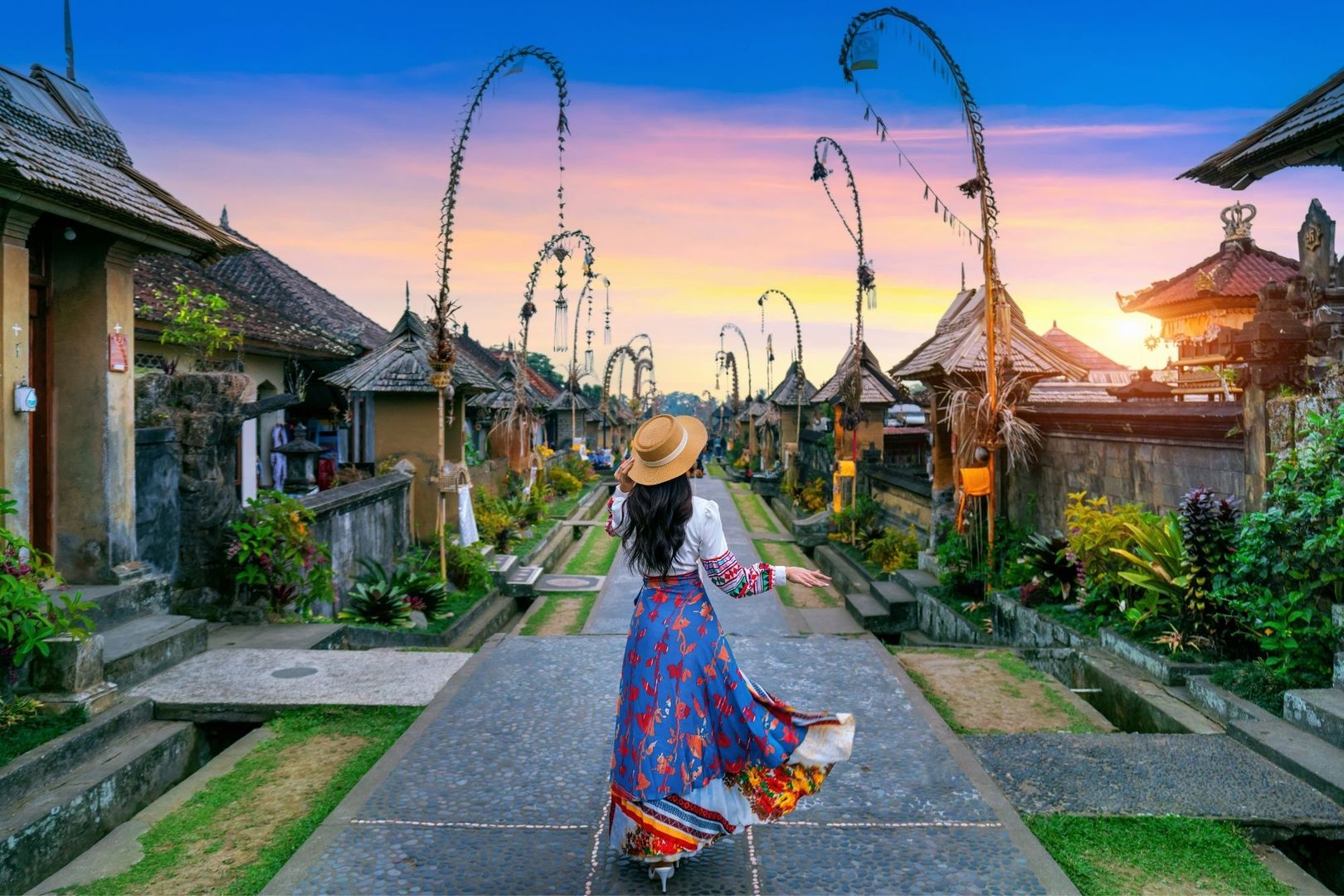
Walking Through Penglipuran Village: Bali's Oldest & Cleanest Traditional Village
Short answer: Penglipuran is one of Bali's best-preserved traditional villages, a living community whose narrow lane runs past family compounds with their temple, prayer house and rice barn, where crafts and customs are still practised. Visit in the morning for the best light and the quietest walk, bring a sarong for temple areas, and remember it is a home, not a set. Potato Bali Tours can add it to a cultural day.
Penglipuran Village is one of the most well-preserved traditional villages in Bali, offering visitors a unique glimpse into authentic Balinese life.
About Penglipuran Village
Located in the Gianyar regency, Penglipuran Village is renowned for its:
- Ancient Architecture: Traditional Balinese houses dating back centuries
- Immaculate Cleanliness: The village is famously known as one of the cleanest in Bali
- Cultural Preservation: Residents maintain traditional customs and ceremonies
- Peaceful Atmosphere: A serene escape from the tourist crowds
What to Expect
Walk through narrow alleyways lined with traditional compounds, each featuring:
- Wantilan (village meeting hall)
- Pura (temple)
- Sanggar (prayer house)
- Traditional rice barns (lumbung)
Traditional Ceremonies
The village maintains a full calendar of Balinese Hindu ceremonies, including:
- Galungan - Day of rejoice
- Kuningan - Day of blessing
- Nyepi - Day of silence
Local Crafts
Visitors can observe traditional crafts such as:
- Palm leaf weaving (造屋根)
- Traditional weaving (songket)
- Bamboo crafts
How to Visit
- Location: Penglipuran, Kubu, Gianyar, Bali
- Best Time to Visit: Morning hours for the best light and fewer crowds
- What to Bring: Comfortable walking shoes, camera, and sarong (required for temple areas)
Frequently asked questions
What will I see when I walk down the main lane in Penglipuran?
The lane is narrow and lined on both sides with traditional family compounds, each holding several structures: the wantilan, the village meeting hall; the pura, the family temple; the sanggar, the prayer house; and the lumbung, the traditional rice barn that stores the harvest. Look at the small shrines at each compound entrance and the offerings arranged neatly in front of them. The village is the attraction — there is no ticket and no tour to follow.
What traditional crafts can I still see in Penglipuran?
Palm leaf weaving, songket weaving and bamboo work are all practised here, and you will usually see them in progress rather than in a display case. The bamboo is not decorative — the village has a sacred bamboo grove that supplies material for ceremonies, construction and daily household use. The crafts are made by residents for the community and for sale, so buying directly from a maker is the simplest way to support the village.
How long should I allow for walking through Penglipuran village?
Allow a couple of hours and walk slowly — the lane itself is not long, but the point of the visit is stopping at the compound gates, looking at the shrines and talking to anyone who invites you into their yard. If you also want to walk the bamboo grove at the end of the path, give yourself a little longer. There is no schedule and no set route, so the length of the visit is entirely up to you.
What should I bring when visiting Penglipuran village?
Comfortable walking shoes are the practical must — the stone lane and the paths around it are uneven. Bring a camera, and a sarong if you have one, since temple areas require covering and sarongs are usually available at the entrance. A light layer helps on the cooler highland mornings. Carry a little cash in small notes for donations, snacks or local handicrafts, and a water bottle for the walk.
Is Penglipuran a living village or an open-air museum?
It is a living village. Families live in the compounds, the temples are used for worship, and the customs described here are the community's own rather than a recreation for tourists. That is exactly what makes the visit worth doing, and it also sets the expectations: cover your shoulders and knees, keep your voice low, do not enter private compounds unless you are invited, and ask before photographing residents.
Can I visit Penglipuran village on Nyepi?
Not really — Nyepi is the Balinese day of silence, when the whole island shuts down for twenty-four hours, airports close and everyone stays indoors, including visitors. The village, like everywhere else in Bali, keeps to it, so plan your walk for another day. Nyepi is worth knowing about even if you are not there on the day, because it explains why some temples, beaches and roads around the island are unexpectedly closed.
Add the village to a wider Bali day
Send us your dates, where you are staying and how much of a day you have free, and we will pair Penglipuran with the cultural sites that sit close by. WhatsApp us at +62 851-7516-3718** — or book online.
Related reading: the full village guide, a slow week in ubud and bali bucket list.