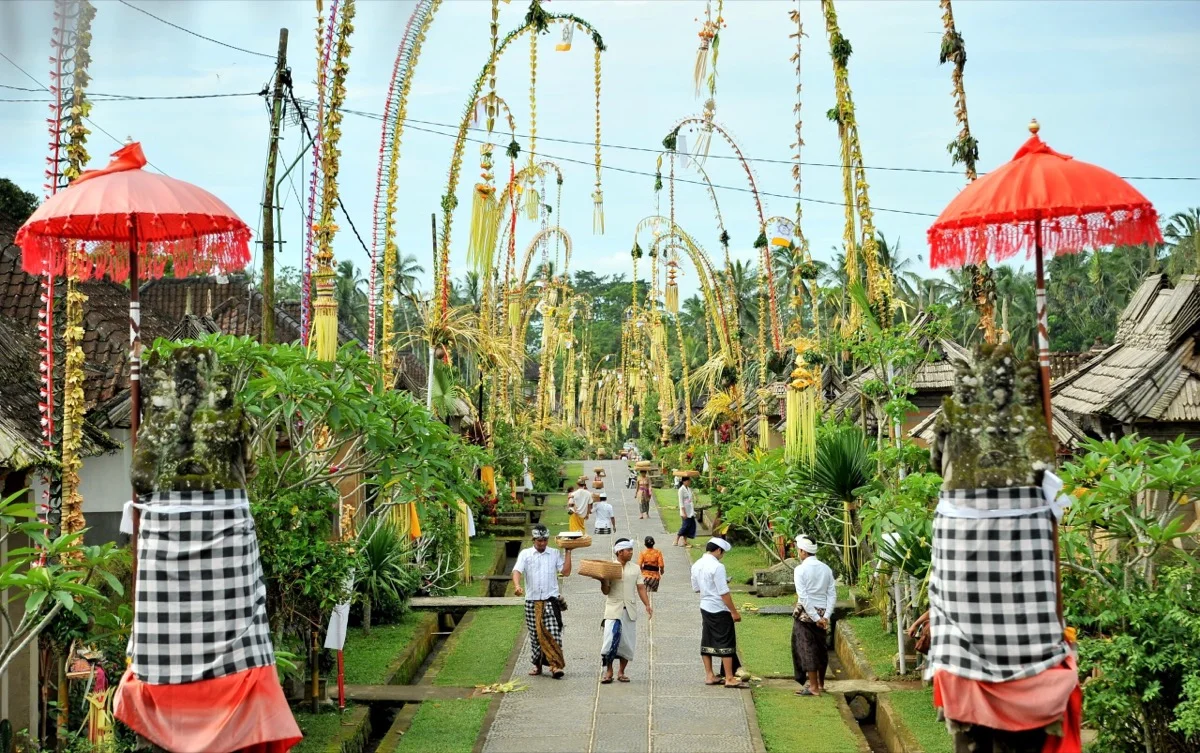
Desa Wisata Penglipuran: Bali's Cleanest Village Complete Guide
Tucked into the cool highlands of Bangli Regency, Desa Wisata Penglipuran is one of Bali's most fascinating cultural destinations. It is not a museum or a recreated village. It is a living community where generations of Balinese families continue to follow ancient customs in their daily lives. The village has gained international recognition for its pristine streets, traditional architecture, and an unusually strong sense of community discipline.
What Makes Penglipuran Special
Penglipuran is a working example of how Bali used to look before mass tourism. Every detail, from the alignment of homes to the absence of litter, is the result of a shared philosophy called Tri Hita Karana, the Balinese concept of harmony between people, nature, and the spiritual world.
A few highlights that set Penglipuran apart:
- Perfectly aligned main street. A single stone pathway runs straight through the village, with traditional family compounds on both sides. The symmetry is intentional and reflects Balinese philosophy about order and balance.
- Identical architectural style. Each house follows the same traditional layout, including the angkul-angkul (split gate), family courtyards, and bamboo architecture. Families are not allowed to alter this style.
- No vehicles inside the village. Cars and motorbikes are not permitted past the entrance, which keeps the air clean and the atmosphere peaceful.
- Bamboo forest at the end of the path. A sacred bamboo grove borders the village and plays a key role in ceremonies and daily life.
- Self-imposed cleanliness. The community runs regular gotong royong (mutual cooperation) cleaning sessions. The result is a place that is almost unreasonably tidy.
Where Is Penglipuran Located?
Penglipuran is located in Kubu Village, Bangli Regency, in the central-eastern highlands of Bali. It sits at a higher elevation than Ubud, which means cooler temperatures and fresher air. The drive from Ubud typically takes around 45 minutes to one hour, while from South Bali areas like Sanur, Kuta, or Canggu, expect around 1.5 to 2 hours depending on traffic.
The village is accessible by car or scooter, and the roads are well-paved right up to the entrance. Once inside, all movement is on foot.
What to See and Do
Walk the Main Stone Pathway
The central pathway is the heart of the experience. Walk slowly and notice the small details: the small shrines at each compound entrance, the neatly arranged offerings, the rows of traditional gates receding into the distance. There is no need to rush. The village itself is the attraction.
Observe Traditional Family Compounds
Each compound belongs to a family and typically includes multiple structures: a family temple, sleeping quarters, a kitchen, and a rice barn. From the main path, you can see the front sections clearly. If a resident invites you closer, accept politely. Conversations, even brief ones, often become the most memorable part of a visit.
Visit the Bamboo Forest
At the end of the main street, a bamboo forest begins. The bamboo here is not just decorative. It is used by the community for ceremonies, construction, and daily household needs. Walking through the forest is a quiet experience, with cool air and the gentle sound of leaves moving overhead.
Look Out for Local Ceremonies
Penglipuran follows the full Balinese ceremonial calendar. If you arrive on the right day, you may witness:
- Galungan and Kuningan, when the village is decorated with towering penjor (bamboo poles)
- Odalan, the temple anniversary held every 210 days
- Ngaben, the colorful cremation ceremonies
- Tumpek Landep, when metal objects and motorbikes are blessed
These events are not staged for tourists. They are part of how the community lives.
Cultural Etiquette and Visitor Rules
Because Penglipuran is a real community, certain behaviors are expected:
- Dress modestly. Shoulders and knees should be covered, especially near temples or family compounds.
- Do not enter private compounds uninvited. The front sections are visible from the path, and that is the appropriate viewing area.
- Keep your voice low. The atmosphere is intentionally calm.
- Ask before photographing people. Most residents are friendly, but respect goes a long way.
- Do not litter. This is one of the cleanest villages in the world for a reason.
- Remove shoes and hats when entering temple areas. Sarongs are usually provided at temple entrances.
Following these simple guidelines helps ensure that the village remains the welcoming place it is today.
Best Time to Visit
Penglipuran can be visited year-round, but timing affects the experience.
Best time of day: Early morning, between 8:00 and 10:00 AM. The village is quiet, the air is cool, and the soft light is ideal for photography. Late afternoon, around 4:00 to 5:30 PM, is also pleasant.
Best season: The dry season from May to September offers the most reliable weather. The rainy season from October to March brings lush greenery, but expect short bursts of rain and slippery stones.
Avoid: Midday between 11 AM and 2 PM, when group tours tend to arrive and the sun is strongest.
Special periods: Visiting during Galungan, Kuningan, or other major Balinese ceremonies adds a unique layer to the experience, but expect more visitors. Arriving early becomes even more important.
How to Get There
Most visitors arrive by car or as part of a guided day trip. Common combinations include:
- With Kintamani and Mount Batur (full-day tour of central Bali)
- With Gunung Kawi Temple and Tirta Empul (cultural day trip)
- With an ATV or cycling tour through the surrounding rice fields and villages
Public transport to Penglipuran is limited, so most travelers either hire a private driver or book an organized tour.
What to Bring
- Comfortable walking shoes (the stone path can be uneven)
- A light sarong (useful for temple areas and respectful dress)
- A reusable water bottle
- A camera, but be respectful when photographing people
- Cash for small donations, snacks, or local handicrafts
Combining Penglipuran with Nearby Attractions
Penglipuran sits in an area rich with cultural and natural sites. If you have more time in Bangli or the surrounding regencies, consider adding:
- Gunung Kawi Temple – an 11th-century rock-cut temple complex
- Tirta Empul – the famous holy spring water temple
- Kintamani – Mount Batur volcano and lake views
- Tibumana Waterfall – a quiet jungle waterfall, perfect for a swim
- Bali Pulina Agrotourism – coffee and spice plantation in the same regency
These can often be combined into a single full-day itinerary.
A Village Worth Taking Seriously
Penglipuran is not a place for thrill-seekers. There are no rides, no beach clubs, and no Instagram-trick photo spots. What it offers instead is something rarer: an honest look at a Balinese community that has chosen to preserve its identity on its own terms. Visitors who come with patience and respect often leave with a deeper understanding of what makes Bali, Bali.
Plan your visit to Desa Wisata Penglipuran and explore Bali's living heritage.
Contact: WhatsApp +62 851 7516 3718 Email: [email protected]